Quick Answer: Pinot Gris vs Pinot Grigio in 10 Seconds
Both names come from the same grape — Vitis vinifera — but style makes the difference.
- Pinot Grigio: Italian-leaning, citrusy, high-acid, crisp, and dry.
- Pinot Gris: French and Pacific Northwest style, textural, ripe, complex, and occasionally off-dry.
At Cellar Beast Winehouse, we believe Washington-grown Pinot Gris delivers the richest and most expressive version of this grape on American soil — a world apart from the neutral, mass-market Pinot Grigios filling supermarket shelves.
At a glance:
- Same grape varietal, two winemaking philosophies
- Pinot Grigio = aperitivo, poolside, and stainless steel
- Pinot Gris = gastronomic, textured, lees-aged sophistication
- Washington terroir amplifies fruit depth and minerality
Royal Slope, WA
Same Grape, Two Very Different Personalities
- Same Pinot Noir family, gray-skinned mutation (“gris” = gray)
- Different regional and stylistic traditions
- Pinot Grigio → Italy’s crisp, stainless-steel tank expression
- Pinot Gris → Alsace- and Oregon-inspired richness, often with barrel fermentation or lees stirring for complexity
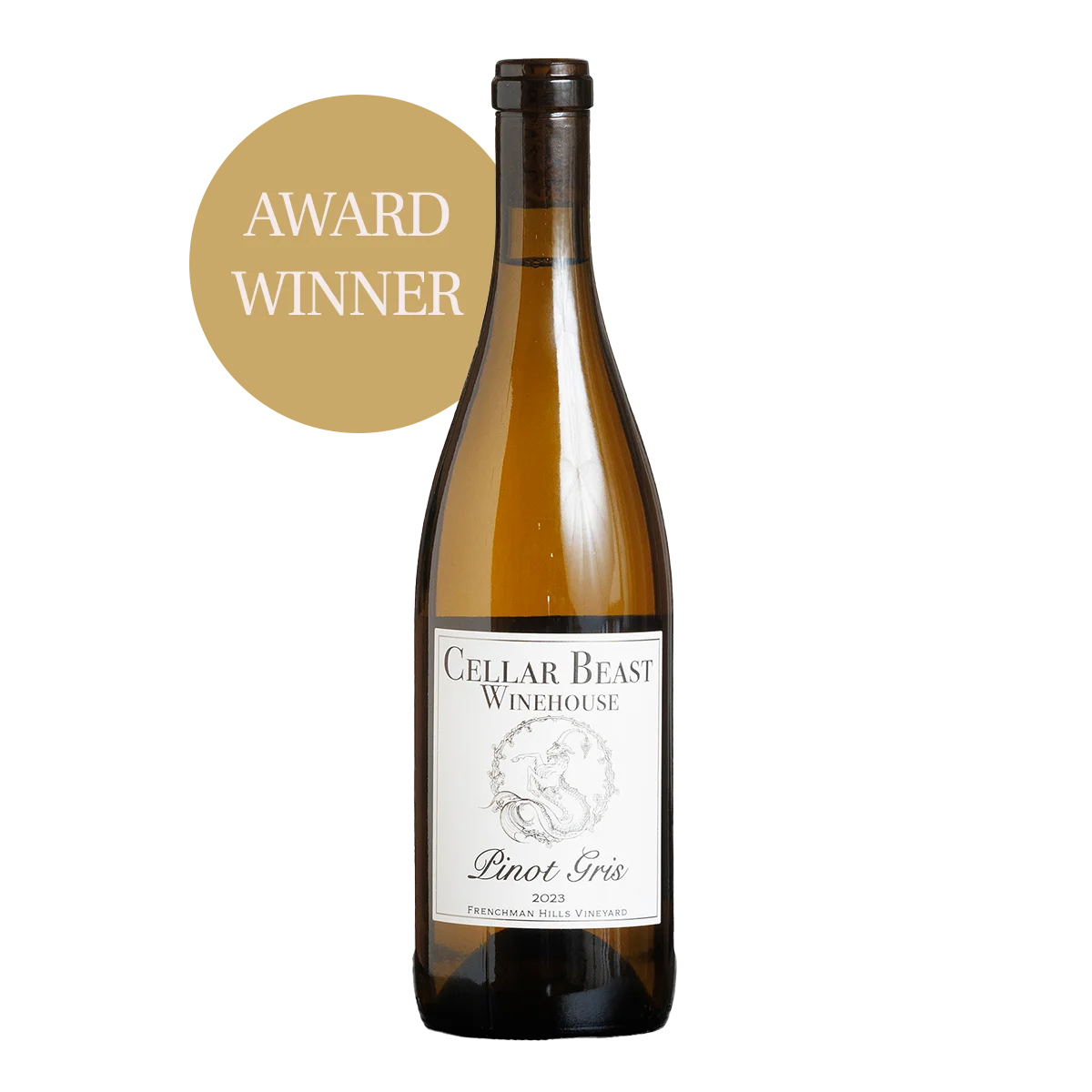
Cellar Beast’s 2024 Mattawa Pinot Gris channels the Old World depth of Alsace with New World fruit purity from Central Washington’s volcanic soils.
Which Should You Buy Tonight?
Pick Pinot Grigio if… you’re craving a light, refreshing white wine for hot weather or casual moments.
Pick Pinot Gris if… You want texture, weight, and sophistication — the kind of white wine that holds up to rich dishes or contemplative sipping.
Shop Cellar Beast small-batch whites now →
Pinot Gris vs Pinot Grigio: Origins, Styles & Structure
One Grape, Italian vs French Attitude
Both wines trace their lineage to Pinot Noir, a mutation that yields grayish-pink skins responsible for the grape’s slightly golden hue.
- Pinot Grigio flourished in Trentino-Alto Adige and Friuli-Venezia Giulia, where winemakers prize freshness, stainless-steel purity, and Mediterranean charm.
- Pinot Gris matured in Alsace, France, evolving into a denser, more textural wine that often undergoes barrel fermentation, malolactic fermentation, and lees stirring.
In the U.S., California’s Pinot Grigio mimics Italian brightness, while Oregon and Washington Pinot Gris reflect Burgundian texture and minerality.
How Pinot Grigio Typically Tastes
Body & Texture
Light to medium-bodied with a lean, refreshing texture. Grigio prioritizes acid over fruit.
Aromas & Flavors
Expect lemon, lime, green apple, and pear, sometimes with a saline or mineral edge that pairs beautifully with seafood.
What Cheap Pinot Grigio Tastes Like (And How to Dodge It)
Many bulk Pinot Grigios from northern Italy or California’s Central Valley are thin, bland, or metallic. Look for:
- Regions like the Alto Adige or Friuli-Venezia Giulia
- ABV of 12–13%, signaling ripeness and flavor balance
- Producers emphasizing stainless-steel tanks, not industrial-scale fermentation
How Pinot Gris Typically Tastes
Body & Texture
Fuller-bodied, often with a waxy or viscous texture. The Washington style, especially from Mattawa, integrates weight and precision beautifully.
Aromas & Flavors
Ripe pear, peach, apricot, and subtle spice or honey. Some show smoky or nutty edges from oak barrels or extended lees aging.
Dry vs Off-Dry Pinot Gris
Look for label hints:
- “Vendanges Tardives” (late harvest) in Alsace-style wines
- Slight residual sugar (RS) in cool-climate Washington vintages adds roundness, not sweetness
At Cellar Beast Winehouse, Head Winemaker Matt Check employs partial malolactic fermentation and lees contact to achieve our signature balance — crisp yet creamy. Learn more about Cellar Beast's production process here.
Sweetness, Acidity & Alcohol: Where They Usually Land
Tip: Check your favorite bottle’s ABV and compare it to our Cellar Beast Mattawa Pinot Gris — balanced alcohol and lees-driven texture always mean quality.
Food Pairings That Actually Matter When You’re Buying
When Pinot Grigio Is the Smart Move
Light, Fresh, High-Acid Meals
- Citrus-dressed salads
- Raw bar, oysters, sushi
- Grilled zucchini and summer vegetables
Travel-Memory Pairings
Recreate your favorite Alto Adige or Friuli terrace lunch — light antipasti, prosciutto, and melon with a frosty Grigio.
Read more about wine and food pairings here.
When Pinot Gris Absolutely Wins
Rich, Creamy & Autumnal Dishes
Pair with roast chicken, pork loin, creamy mushroom risotto, or beurre blanc sauce.
Spice & Umami
Works beautifully with Thai curries, Vietnamese grilled pork, and Korean BBQ — its texture and slight sweetness tame heat and salt.
“White Wine for Red Wine People”
Ideal for Pinot Noir or Cabernet Sauvignon fans seeking a white with structure.
Entertaining a Crowd: Pour Both and Be Done
Welcome guests with Pinot Grigio for aperitivo hour, then switch to Pinot Gris for dinner.
Estimate ½ bottle per guest for tastings or one bottle per person for meals.
Royal Slope, WA
Cellar Beast’s Food Pairing Shortcuts for Pinot Lovers
Cellar Beast recommends pairing Washington Pinot Gris with dishes featuring cream, herbs, or umami. It's less dry than any Italian Pinot Grigio in gastronomic settings.
Shop the Styles: Pinot Grigio Bottles Worth Hunting Down
What “Good” Pinot Grigio Looks Like on the Shelf
Look for bottles from Alto Adige, Friuli-Venezia Giulia, or Pipers Brook (Australia). Expect prices from $15 to $25 for quality.
Crowd-Pleaser Pinot Grigio for Parties
Choose stainless-steel fermented, bone-dry wines with 12–12.5% ABV — crisp but not sour.
Where Cellar Beast Fits on the Pinot Grigio Map
While we don’t bottle a “Grigio” in name, our crispest Washington whites, including Sauvignon Blanc from Meek Vineyard, emulate the mineral-driven Italian spirit with far greater concentration.
Shop Cellar Beast’s Gris-style whites online →
Pinot Gris for the Serious White-Wine Lover
The Alsace-Inspired Side of Pinot Gris
Our Cellar Beast Pinot Gris channels riper pear and quince tones balanced by lees stirring and neutral French oak aging. It appeals to fans of white Burgundy and Chardonnay who crave texture and weight.
Dry vs Off-Dry Pinot Gris: Reading the Label
If you see “off-dry” or “residual sugar,” don’t fear — this simply balances acidity. Perfect for pairing with spice, cheese, or autumn fare.
Cellar Beast’s Signature Pinot Gris Expression
At Cellar Beast Winehouse, we craft Pinot Gris with:
- Grapes sourced from Royal Slope AVA, WA, known for its organic farming practices and volcanic minerality
- Partial oak aging and lees stirring for texture
- Low-intervention winemaking that highlights terroir
- Sustainable choices from vineyard to bottle
CTA: Taste this at the Cellar Beast Winehouse →
Cellar Beast’s Take on Pinot Gris vs Pinot Grigio
Cellar Beast Signature Insight
“One grape, three moods”:
- Ultra-crisp, mineral (Grigio style)
- Textured, gastronomic (Gris style)
- Experimental small-batch (skin contact or barrel-aged Pinot G)
How Cellar Beast Crafts This Style
Head Winemaker Matt Check times harvest to retain natural acidity, then decides between:
- Stainless-steel tanks for freshness
- Neutral oak barrels for texture
- Lees stirring to enhance roundness
Why Cellar Beast Wines Stand Out
Small-batch production from elite Washington AVAs means no industrial shortcuts — just authentic flavor, balance, and sustainability.
Taste at our Pennsylvania estate before you commit to a whole case.
Book a guided Pinot tasting at Cellar Beast →
How to Choose: Pinot Gris vs Pinot Grigio in 20 Seconds
Rapid-Fire Scenarios
- Hot-weather pool day: Pinot Grigio
- Creamy mushroom pasta: Pinot Gris
- Hosting wine enthusiasts: Washington Pinot Gris
Comparison Table
Common Buying Mistakes (and How Cellar Beast Fixes Them)
- Grabbing the coldest supermarket Grigio
- Assuming all Gris is sweet
- Ignoring food pairing context
At Cellar Beast Winehouse, we curate only estate-quality small batches designed to elevate both palate and conscience.
Serving, Temperature & Storage (So You Don’t Ruin a Good Bottle)
Ideal Serving Temp
- Pinot Grigio: 45–48°F (20–30 min in fridge)
- Pinot Gris: 50–54°F (slightly warmer to open aromatics)
Glassware, Decanting & Not Overthinking It
Use a standard white wine glass for Grigio.
Upgrade to a Burgundy bowl to reveal Gris's aromatic depth.
How Long Does It Stay Good After Opening
- Grigio: 2 days refrigerated
- Gris: Up to 4 days with vacuum seal
Keep a rotation of Cellar Beast whites so you’re never stuck with a tired bottle →
Plan Your Next Visit to Cellar Beast Winehouse
Taste a Pinot Flight at the Cellar Beast Tasting Room
Enjoy a side-by-side Pinot Gris vs Pinot Grigio-style pour, guided by our sommeliers. Check out our upcoming wine events.
Host Your Next Event Surrounded by Barrels
Book private tastings, dinners, or celebrations among the French oak barrels that give our wines their signature character.
Join the Cellar Beast Insider List
Get early access to our Pinot releases, exclusive events, and limited bottles.
Shop Cellar Beast Pinot online or plan your visit now →
About the Author
Kim McCullough, Owner of Cellar Beast Winehouse, leads the brand’s vision of crafting award-winning wines in Pennsylvania from premier West Coast vineyards. Drawing from vineyard partnerships in Yakima Valley, Red Mountain, and Mattawa, Kim and the team—led by Head Winemaker Matt Check—translate elite AVA fruit into Old World–inspired wines of balance, sustainability, and authenticity.