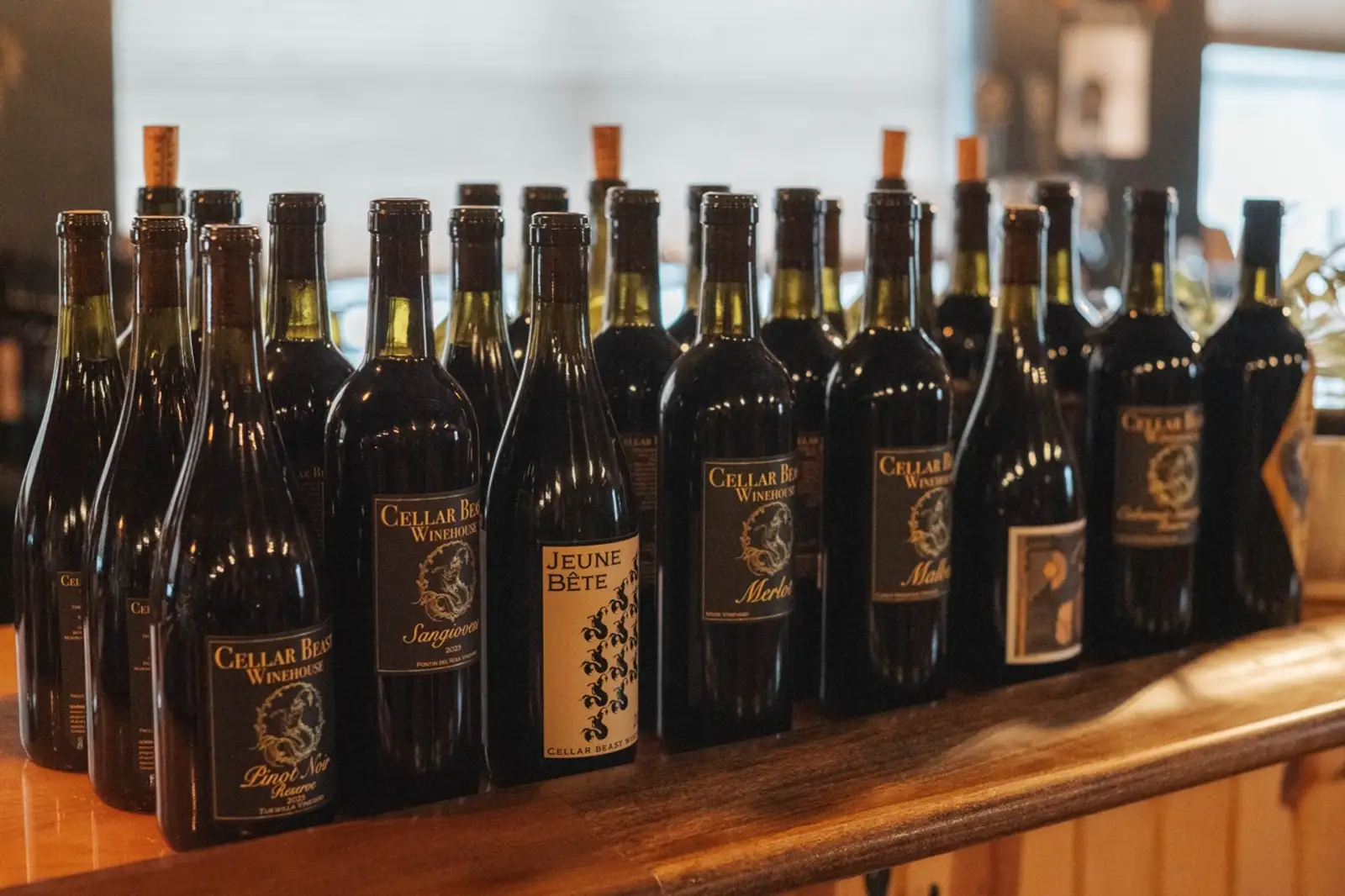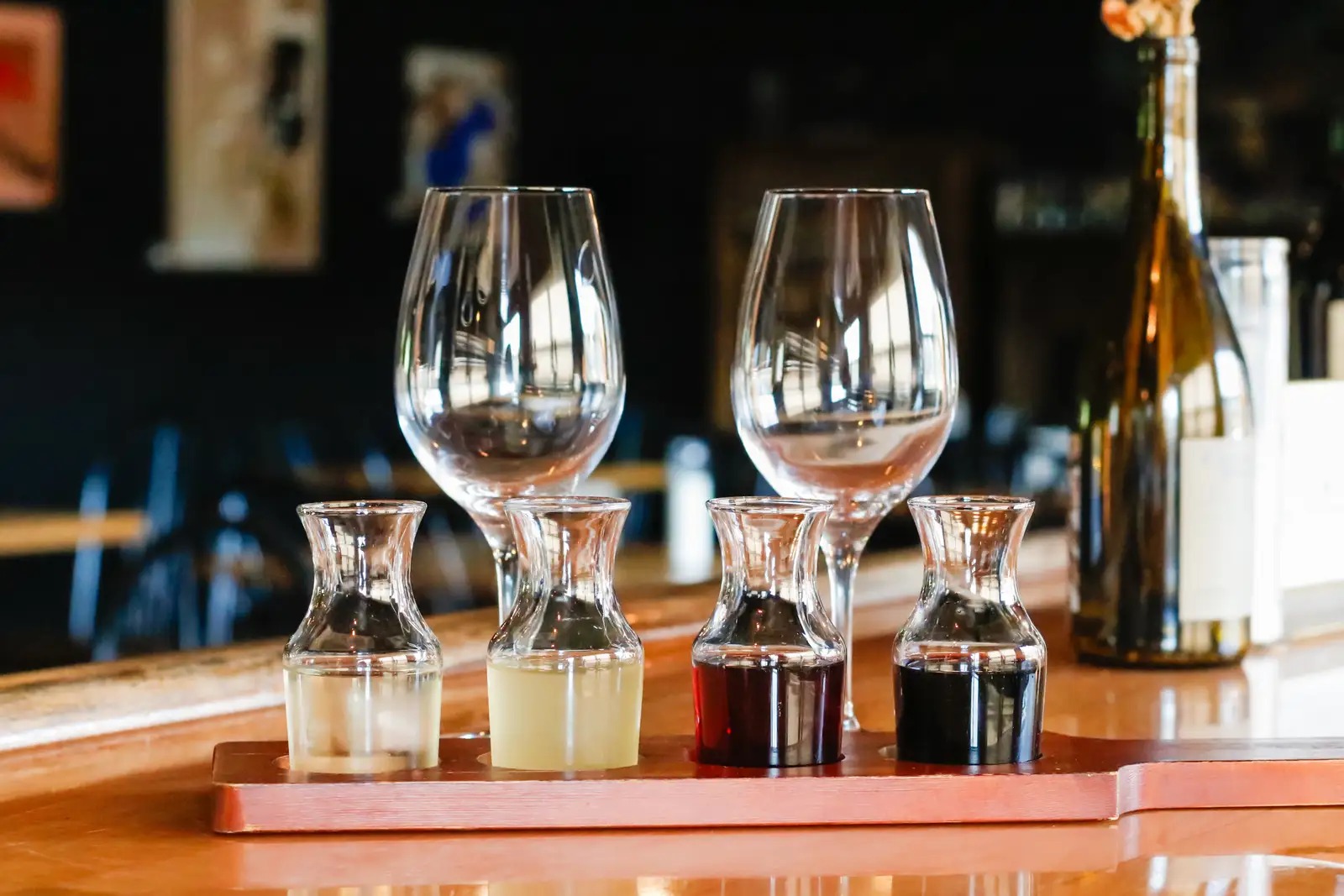
Wine gets confusing fast because people talk about grapes, regions, sweetness, color, body, and price as if they are the same thing. They are not. The easiest way to start is with the seven main kinds of wine: red, white, rosé, sparkling, dessert, fortified, and orange. Once you know those buckets, choosing a bottle gets much easier.
At Cellar Beast Winehouse, award-winning wines are crafted in Pennsylvania from premier West Coast vineyards in Yakima Valley, Red Mountain, Horse Heaven Hills, Dundee Hills, and Lodi. We follow Old World winemaking techniques—whole-berry fermentation, extended maceration, and aging in new and neutral French oak—to capture both place and precision.
Not sure which wine you actually like?
Taste the different kinds of wine side-by-side.
Reading helps. Tasting teaches. Book a guided Cellar Beast tasting and compare reds, whites, rosé, sparkling, and more with help from our team. You’ll leave knowing what you actually enjoy — not just what sounds impressive.
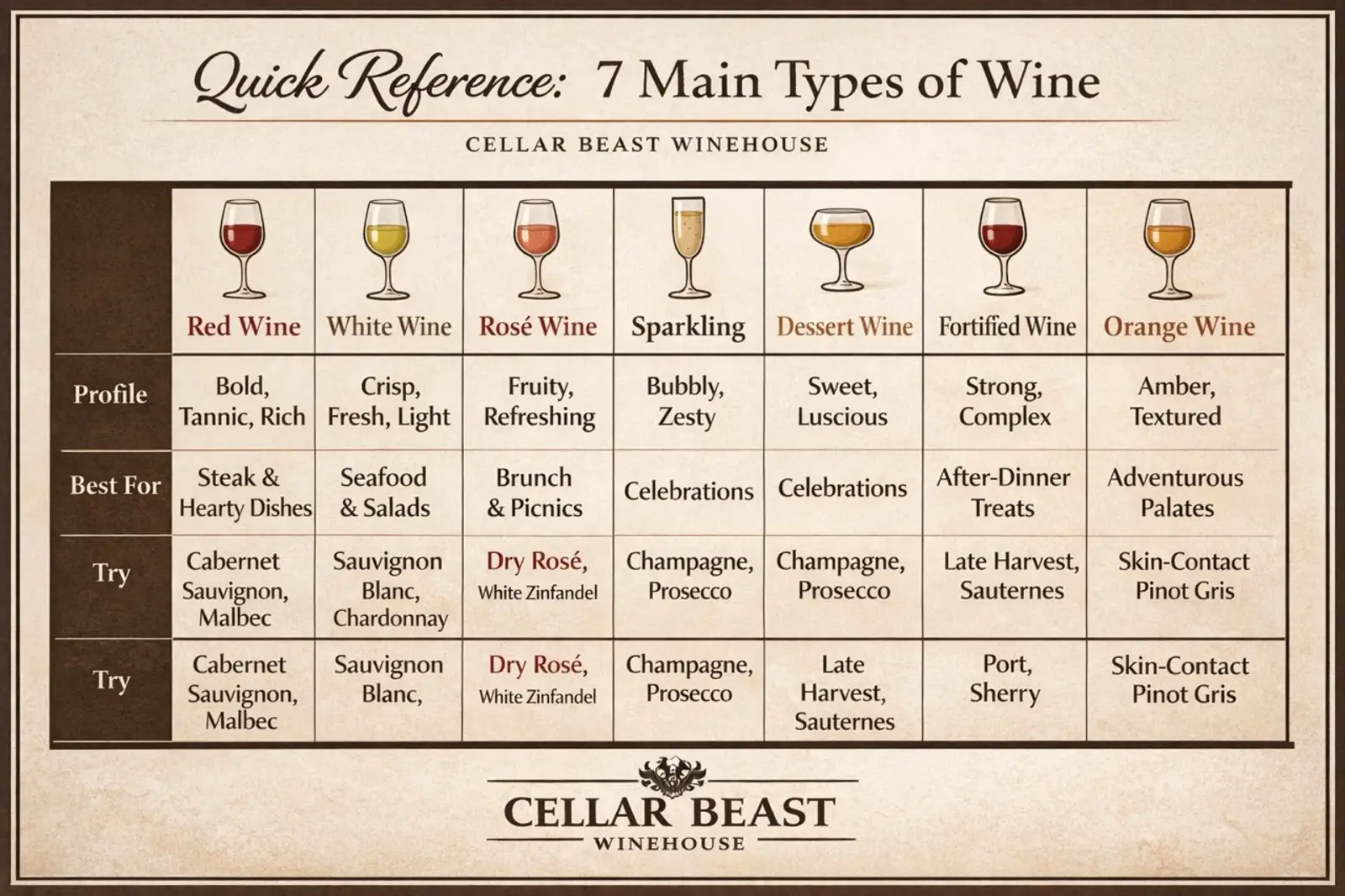
Quick Answer: The 7 Main Types of Wine
| Type | Primary Grape Color | Key Winemaking Technique | Typical Flavor Profile |
|---|---|---|---|
| Red Wine | Black grapes | Fermented on skins for tannin and color | Dark fruit, spice, firm structure |
| White Wine | White grapes | Minimal skin contact, cool fermentation | Citrus, stone fruit, minerality |
| Rosé Wine | Black grapes (limited contact) | Short maceration for pale color | Strawberry, melon, floral notes |
| Sparkling Wine | White or black grapes | Secondary fermentation producing carbon dioxide | Citrus, brioche, lively acidity |
| Dessert Wine | White grapes | Late harvest or fortifying wine to preserve sweetness | Honey, apricot, caramel |
| Fortified Wine | Black or white grapes | Spirit added during fermentation | Nutty, raisin, warming finish |
| Orange Wine | White grapes (skin contact) | Extended maceration on skins | Tea leaf, dried fruit, amber hue |
How to Choose Among Different Kinds of Wine
| Mood | Food Pairing | Recommended Type of Wine | Cellar Beast Example |
|---|---|---|---|
| Comfort & Depth | Ribeye, truffle risotto | Red wine | Cellar Beast Cabernet Sauvignon or Cellar Beast Syrah |
| Fresh & Mineral | Oysters, goat cheese | White wine | Cellar Beast Sauvignon Blanc or Cellar Beast Pinot Grigio / Pinot Gris |
| Romantic & Elegant | Salmon, mushroom pasta | Rosé wine | Cellar Beast Cabernet Franc Rosé |
| Celebration | Fried chicken, caviar | Sparkling wine | Cellar Beast Pétillant Naturel (Pét-Nat) |
| Indulgent & Sweet | Chocolate, blue cheese | Dessert or Fortified wine | Cellar Beast Dark Angel Carménère Blend |
The Seven Different Kinds of Wine Explained
1. Red Wine
Red wines derive color, texture, and high tannin from extended contact with grape skins. Typical grape varieties include Cabernet Sauvignon, Pinot Noir, Merlot, Cabernet Franc, Petit Verdot, Garnacha (Grenache), and Malbec. The Bordeaux Wine Council notes that structured reds with firm tannins are often crafted for longer-term aging.
Signature Bottles: Cellar Beast Cabernet Sauvignon (Yakima Valley) – black currant, graphite, and cocoa notes; Cellar Beast Grenache-Syrah Jeune Bête – bright red fruit and herbs; and our Red Mountain Reserve Bundle, a Cabernet-Malbec pairing from Red Mountain's top vineyards.
Matt Check, Head Winemaker, says: “Tannin only matters when balance is lost. Our fermentations coax structure without bitterness.”
Serve in large-bowl red wine glassware; pairs with beef, lamb, or aged cheddar. Continue reading about red wine types here.
2. White Wine
White wines from white grapes emphasize acidity and aromatic lift. Sauvignon Blanc, Chardonnay, Chenin Blanc, Pinot Grigio / Pinot Gris, Grüner Veltliner, and Muscat Blanc offer distinct expressions of terroir.
Cellar Beast Sauvignon Blanc (Meek Vineyard) delivers chalky minerality inspired by Loire Valley appellation laws.
Cellar Beast Chardonnay (Columbia Valley) balances citrus brightness with creamy texture.
Ideal pairings: seafood, roast chicken, and alpine cheeses. Best served around 48 °F.
3. Rosé Wine
Rosé wines blend the freshness of white wine with the fruit of red wine through brief skin contact. Cellar Beast Rosé (Yakima Valley) offers white peach, nectarine, and stone-fruit tones finishing clean.
These wines embody modern wine culture – approachable, seasonal, and versatile for food pairings from charcuterie to salmon. Continue reading about rose wines here.
4. Sparkling Wine
Sparkling wines, whether Champagne, Crémant, or Pét-Nat, achieve their effervescence through secondary fermentation, which releases carbon dioxide. Cellar Beast Sparkling Wine (Yakima Valley Pinot Noir Rose) uses the Méthode Champenoise to achieve a creamy texture.
Tasting notes include green apple, brioche, and citrus zest. Pair with shellfish or fried foods.
Historical context: Regions across Europe, from Château de Saumur to Vinho Verde, share a centuries-old sparkling wine heritage under regional appellation laws. The World Atlas of Wine identifies Champagne, Franciacorta, and English sparkling wine as benchmarks for traditional-method sparkling wines.
5. Dessert Wine
Dessert wines concentrate sugar through botrytis or freezing. Cellar Beast Chenin Blanc and Muscat Blanc mirror classic European sweet styles. Notes of honey, candied apricot, and caramel balance bright acidity.
Aging potential spans two decades; serve slightly chilled with fruit tarts or blue cheese. Their production method illustrates the art of stopping fermentation at precise sweetness levels—a lesson taught in the Napa Valley Wine Academy’s Level 1 Award in Wine program.
6. Fortified Wine
Fortified wines are produced by adding grape spirit during fermentation. This technique originated in the Douro Valley for Port creation and in Spain for Sherry styles.
Cellar Beast Dark Angel (Carménère 91%, Petit Verdot 9%) echoes these traditions with notes of spice, graphite, and silky tannins after 17 months in French oak.
Pair with dark chocolate or nuts. This style illustrates how fortifying wine increases longevity and aromatic intensity.
7. Orange Wine
Orange wine – also called skin-contact white – ferments white grapes on their skins, a winemaking process traced to the Areni-1 Cave in Armenia over 6,000 years ago. Expect an amber hue, tea-like tannins, and a marmalade aroma.
Aaron McCullough describes it as “the bridge between white wine’s freshness and red wine’s texture.” Cellar Beast Gewurztraminer Orange Wine draws on ancient European methods refined through modern cellar control.
Cellar Beast Philosophy: Structure Over Hype
Every Cellar Beast bottle reflects a balance of acidity, tannins, sweetness, and aromatics. Whole-berry fermentation and neutral oak aging showcase true terroir. As Matt Check notes, “Structure defines longevity; fruit defines charm.”
This approach aligns with European wine heritage yet thrives in New World regions. Featured examples include Cellar Beast Jeune Bête, Cellar Beast Dark Angel, and Cellar Beast Cabernet Sauvignon.
Sip More, Spend Less—Join the Cellar Beast List
Get 10% off your first online wine order when you join our insider list. Plus, be the first to know about new releases, tasting events, exclusive promos, and expert blog tips.
We respect your inbox. No spam—just wine, events, and offers worth sipping on.
Build Your Own “Different Kinds of Wine” Flight
Explore all the main types of wine at the Cellar Beast Winehouse Split Rock Tasting Room. The flight includes Cellar Beast Sauvignon Blanc, Cabernet Franc Rosé, Pét-Nat Sparkling, Cabernet Sauvignon, Dark Angel Fortified-style, Chenin Blanc Dessert Wine, and Pinot Gris Orange Wine. Guests learn to evaluate body, acidity, and aroma across styles using professional wine glassware. Premium wine reports such as Silicon Valley Bank’s State of the Wine Industry highlight that consumers trading up are exploring more diverse styles. Read more about upcoming wine tasting events here.
Join the Cellar Beast Wine Club to receive quarterly shipments and education materials curated from BKWine Magazine and our own team of sommelier-trained staff.
Different Kinds of Wine — FAQ
What are the seven main types of wine and how do they fit into different kinds of wine?
The seven main types are red, white, rosé, sparkling, dessert, fortified, and orange. These different kinds of wine are defined by grape choice, skin contact, fermentation, and aging decisions. Learn the buckets first, then drill down into regions and styles.
Which Cellar Beast wine is best for beginners exploring different kinds of wine?
Start with Cellar Beast Pinot Noir or Cellar Beast Sauvignon Blanc. They're clean, balanced, and forgiving—soft tannins or bright acidity without the heavy bite. If you're sampling different kinds of wine, these two keep your palate fresh and your learning curve short.
How is sparkling wine made, and why does it stand out among different kinds of wine?
Sparkling wine is made by a secondary fermentation that traps carbon dioxide in the bottle or tank. Méthode Champenoise (traditional method) is the benchmark because it builds finer bubbles and more complexity. It's one of the different kinds of wine where process matters as much as grapes.
Do orange wines contain oranges, or is it just another of the different kinds of wine?
No—orange wine doesn't contain oranges. Its amber color comes from fermenting white grapes on their skins, aka skin-contact white wine. Among different kinds of wine, it's the bridge between crisp whites and tannic reds.
Which Cellar Beast wines have great aging potential among different kinds of wine?
For Cellar Beast, Cabernet Sauvignon, Petit Verdot, and Dark Angel Carménère have the strongest aging potential. Give them proper cellar conditions—cool, dark, and steady—and they'll reward patience with deeper structure and smoother edges. If you're comparing different kinds of wine for longevity, these are the safe bets.
About the Author
Written by Kim McCullough, Owner and Brand Director of Cellar Beast Winehouse. A graduate of Level 2 sommelier certification of the National Wine School (similar to the Napa Valley Wine Academy), Kim blends storytelling and sensory training to illuminate modern wine culture. Cellar Beast produces small-batch Pennsylvania wines from elite West Coast vineyards using sustainable methods.
Next Reads: Build Your Own Wine Playbook
You’ve got the seven main kinds of wine down. Here’s where Cellar Beast takes you next—deeper, sharper, and closer to the bottles that actually belong in your glass.
- Wine for Beginners: Your Essential Guide to Wine Basics – A fast reset on the fundamentals so you can walk into any tasting room like you belong there.
- Types of Red Wine Explained - Taste & Pairing Guide – Go beyond “red vs white” and learn how Cabernet, Pinot, Syrah & friends really behave in the glass and on the table.
- Chardonnay Wine: A Complete Guide to Styles, Regions & Best Bottles – From lean and mineral to plush and creamy, this is your roadmap to Chardonnay without the guesswork.
- The Art of Pink Wine: Discover Cellar Beast's Rosé Revolution – For nights when you want roses, acid, and attitude in the same glass.
- The Comprehensive Guide to Wine Production Process – Follow the journey from vineyard to bottle so the “how it’s made” finally matches what you’re tasting.
- Wine and Food Pairing Guide – Best Combinations & Pro Tips – Turn dinner into a pairing session with simple, sommelier-backed rules that don’t kill the mood.
Pick one, pour a glass of Cellar Beast, and treat this as your next move—not just more reading.